
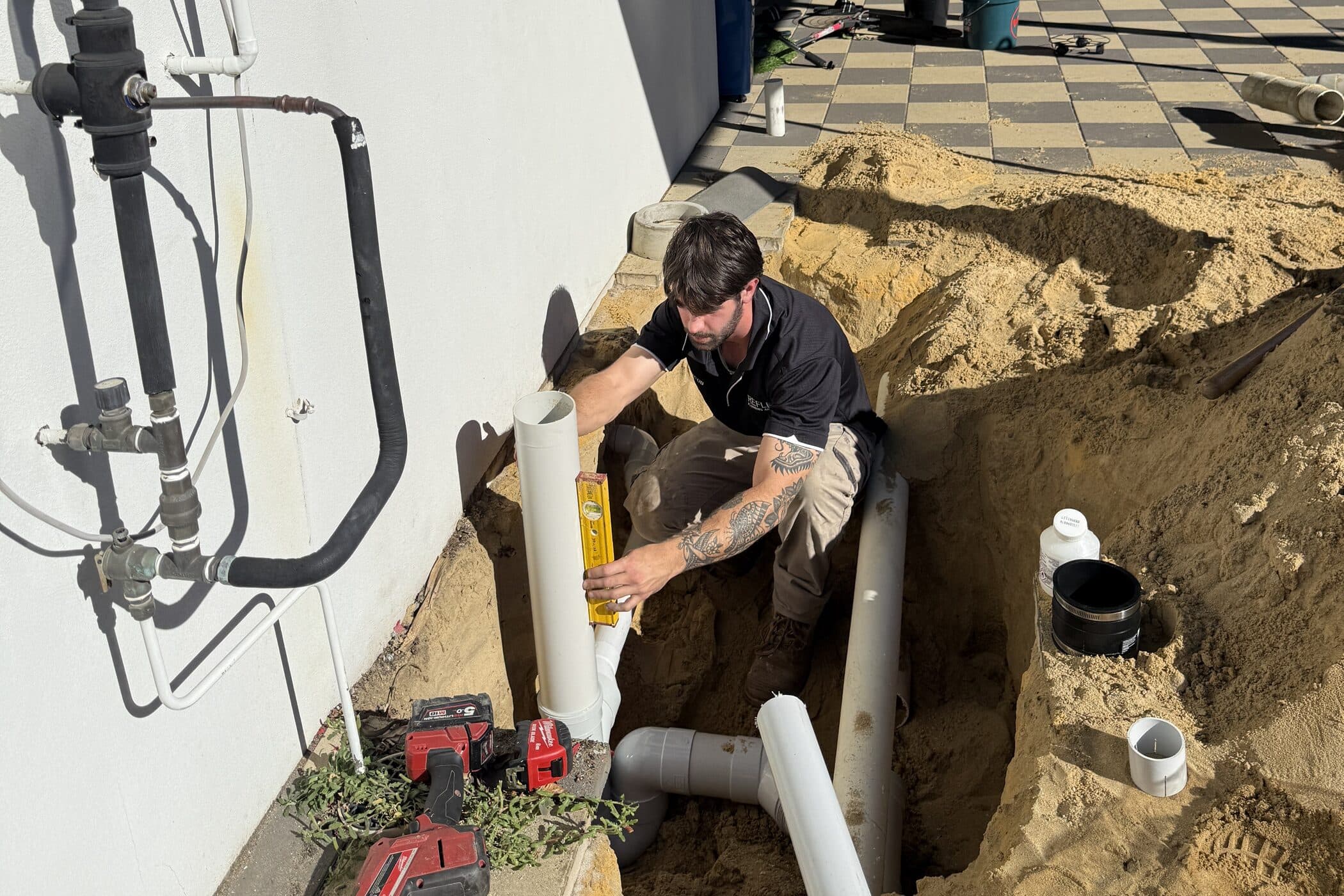
A burst pipe is an emergency measured in minutes. A hidden leak is an emergency measured in months — it shows up as a water bill that has quietly doubled, a warm patch on a slab, or a skirting board that has gone soft.
Both are worth acting on immediately, and the second one is the one people put off.
What we handle
- Burst and split pipe repairs, copper and poly
- Hidden leak location using acoustic and thermal methods
- Slab leaks and under-floor pipework
- Wall and ceiling leaks, including the ones that present as a stain
- Tap, mixer and toilet leaks
- Water meter checks for unexplained usage
Worth knowing
Right now, if a pipe has burst
Turn the water off at the meter — usually at the front boundary, a lever or a tap under a small lid. Turning it a quarter-turn clockwise stops the damage while you wait for us. Knowing where that lid is before you need it is worth thirty seconds today.
The dead-simple leak test
Turn off every tap and appliance, then read the water meter. Come back in an hour without using anything. If the reading moved, you have a leak somewhere on your side of the meter.
Common questions
My water bill jumped and I cannot see anything. What now?
That pattern usually means an underground or under-slab leak, a leaking toilet inlet valve, or a failed irrigation solenoid. All three are findable without digging up the yard on a hunch.
Can you find a leak without breaking the wall?
In most cases, yes. Acoustic listening equipment and thermal imaging locate the leak first, so the opening we make is small and in the right place rather than exploratory.
Who pays for a leak between the meter and the house?
Generally the property owner is responsible for pipework on their side of the meter, and the water utility for its side. Some hidden-leak allowances exist for owners — worth asking your retailer about once the leak is documented.