
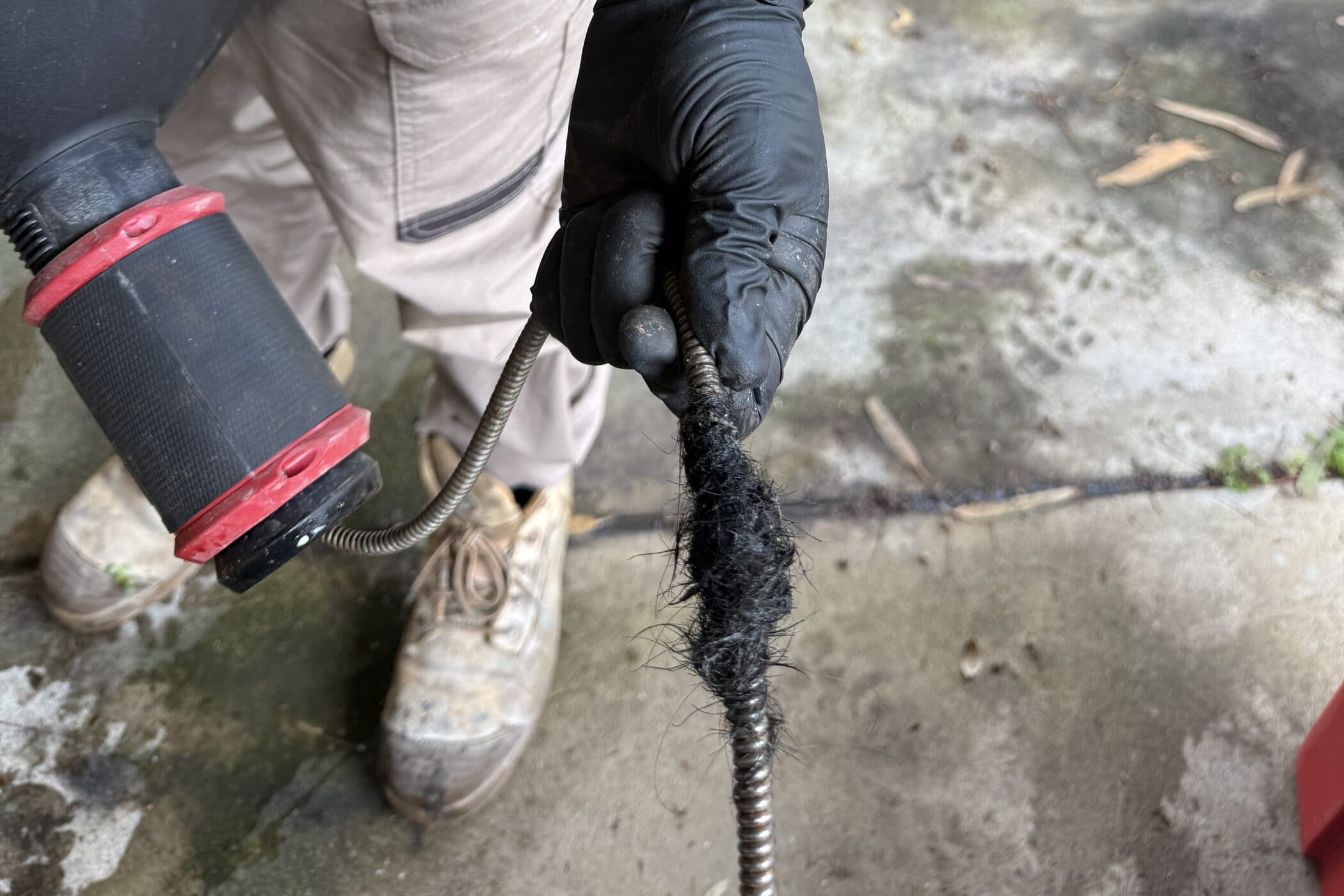
Clearing a blockage is the easy half. The half that matters is finding out why it blocked, because a drain that has blocked twice will block a third time, and tree roots do not get bored and leave.
In the older parts of Riverton, Ferndale and Parkwood we still find original clay and earthenware runs with root intrusion at the joints. In the newer Canning Vale estates it is far more often a build-up or a fall problem. The clearing method is the same; the conversation afterwards is completely different.
What we handle
- Sink, basin, shower and floor waste blockages
- Blocked toilets and overflowing gully traps
- Tree root intrusion, cut and cleared
- CCTV drain inspection to find the actual cause
- Sewer and stormwater line clearing
- Repairs to collapsed and misaligned sections
Blocked toilets and blocked sewers
From the bathroom the two can look like the same problem. They are not, and which one you have decides what fixes it.
Blocked toilets
A toilet that fills towards the rim and drains slowly, or not at all, is blocked either in the pan and the bend behind it or somewhere further down the line. The rest of the bathroom tells you which. If the basin and shower are draining normally, the blockage is at the toilet itself: too much paper, wipes, or something that was never meant to be flushed.
Do not flush again to test it, because a second cistern of water is what puts it on the floor. A plunger is worth a try. If that clears it and it blocks again within days, the cause is further along than a plunger reaches, and that is when to ring us.
Blocked sewers
The sewer is the main line that carries everything from the house out to the Water Corporation's sewer main. When it blocks, more than one fixture is affected: the toilet gurgles when a basin empties, the shower backs up when the washing machine drains, and the grated gully outside starts to overflow.
No plunger will shift it, because the blockage is metres from any fixture. It needs finding rather than plunging: we clear the line, then put a camera through it to see what it blocked on.
If sewage is already coming up inside the house or spilling from the gully, stop using water in the house and call. The phone is answered at any hour for exactly that.
Emergency plumbing: what to do before we arrive →Worth knowing
Ask what caused it
If a drain is cleared and nobody tells you why it blocked, you have bought time, not a repair. A camera down the line answers this in minutes.
Common questions
What causes most blocked drains?
Tree roots, fat and food waste, wet wipes — including the ones sold as flushable — and hair. In older southern-suburbs homes with clay pipework, roots are the usual answer by a wide margin.
Will drain cleaner from the supermarket fix it?
Occasionally on a hair-clogged basin. On a main line it will not reach the blockage, and the caustic ones sit in the trap and make the pipe unpleasant and sometimes dangerous for whoever opens it next. Tell us if you have poured any in.
Who is responsible for a blocked sewer, me or the Water Corporation?
Blockages in the plumbing on your property are the owner's responsibility, and that includes the overflow gully and the property sewer running out to the connection. A blockage in the sewer main itself, which is normally outside the property, is the Water Corporation's. Finding out which side it is on is part of clearing it. If it turns out to be in their main, we report it and their crew attends.
Do I need a camera inspection?
Not for a first-time kitchen sink blockage. Yes for anything recurring, anything affecting multiple fixtures, and before you spend money on excavation — it is the difference between repairing the right two metres of pipe and guessing.