
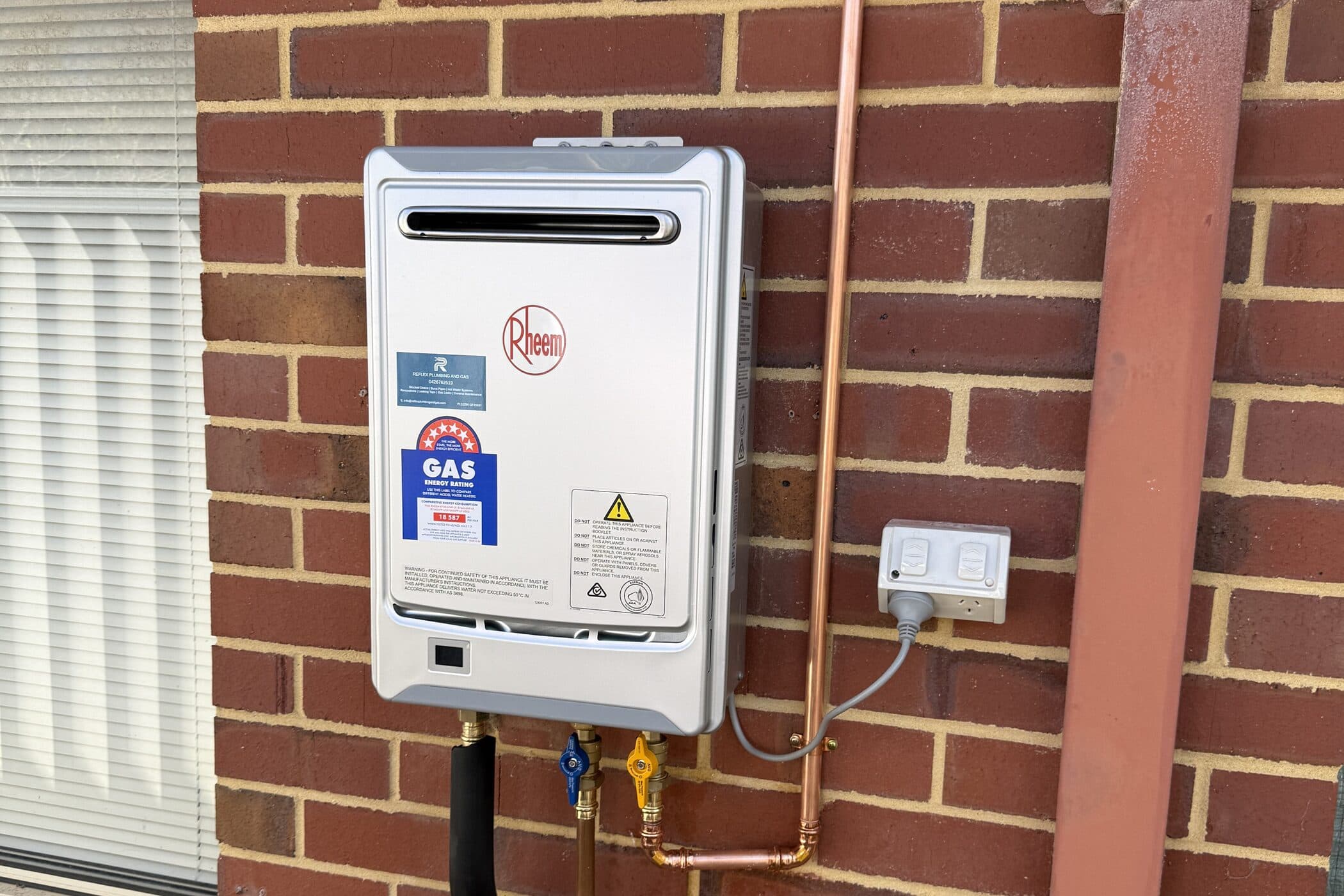
Hot water is the job we get called about most, and it is the one where households most often overpay. A unit that has failed on a thermocouple or a tempering valve does not need replacing. A fifteen-year-old storage tank weeping at the seam does, and no amount of parts will change that.
We will tell you which situation you are in before quoting the expensive option, and if replacement is genuinely the answer we will size the new unit to the household rather than to the one that happens to be on the van.
Which system suits you?
0/4
Four questions, an honest answer. It will tell you to repair rather than replace where that's the right call — we'd rather you trusted the advice than bought a unit you didn't need.
What we handle
- No-hot-water diagnosis, gas and electric
- Thermostat, element, thermocouple and tempering valve replacement
- Relief valve and leaking-tank assessment
- Storage and continuous-flow replacements, like-for-like or upgraded
- Heat pump and solar hot water installation
- Recirculation and pressure problems — hot water that takes too long to arrive
The four types of hot water system
Nearly every hot water system on a Perth house is one of four kinds. Which one you have decides what tends to go wrong with it. Which one you should have next is a separate question, and the selector above is the quick way into it.
Instantaneous (continuous flow) gas hot water
Continuous flow, instantaneous and plain "instant" hot water are three names for the same thing: a unit with no tank, which heats the water as it passes through. On a Perth house it is nearly always gas. The burner lights when a hot tap opens and shuts down when it closes, so nothing is stored, it cannot run out, and it takes up far less room than a tank.
It suits a full house with gas connected, where back-to-back showers would empty a tank. The catch is the supply. A continuous flow unit burns far more gas at once than a storage tank does, so swapping from one to the other often means a larger gas line from the meter, and most units need a power point within reach. We check both before quoting.
When one plays up it is usually a part rather than the whole unit, and it shows as water that runs hot and then cold, a burner that will not light at a low flow, or a fault code on the controller. If there is a code showing, write it down before you ring. These units are worth repairing for longer than a tank is, because there is no cylinder to rust through.
Licensed gas fitter: new gas runs and pipe upsizing →Storage hot water, gas and electric
A storage system heats a full tank and keeps it hot until somebody uses it, with a gas burner underneath the cylinder or an electric element inside it. It is the cheapest kind to install and the simplest to replace like for like, and electric storage is the most expensive kind to run.
The limit is the tank: once it is emptied, you wait for it to reheat. What fails on one is nearly always a part, until the cylinder itself starts to leak.
Solar hot water
A solar hot water system heats water in collector panels on the roof and stores it in a tank, which sits either on the roof above the panels or at ground level with a small pump circulating between the two. A gas or electric booster covers the days the sun does not.
Perth has the sunshine for it, and a well-sited system does most of its summer work for nothing. It needs unshaded roof facing roughly north and, if the tank is going up there as well, a roof that can carry the weight. The comparison worth making now is solar hot water against a heat pump run off your own solar panels. Which comes out ahead depends on the roof, the panels already on it and how the house uses hot water, so we would rather look than assume.
When a solar system stops keeping up, the fault is often in the booster, its thermostat or a valve — much the same parts as on an ordinary storage tank — rather than in the panels. It tends to show in winter, when the booster is doing most of the work, and it is worth a diagnosis before anyone quotes you for a whole new system.
Heat pump hot water
A heat pump is an electric storage system that does not heat the water directly. It takes heat out of the outside air and moves it into the tank, the way a fridge moves heat out of its cabinet, and it does that on a fraction of the electricity an element would use.
It suits a house with no gas, and suits one with solar panels better still, because the unit can be set to run in the middle of the day. It generally reheats more slowly than a gas unit, so the tank has to be sized with that in mind. Where it can physically go matters just as much, and that is in the questions below.
Worth knowing
Repair or replace
Under about eight years old and the fault is a component: repair. Past twelve years, leaking from the tank body rather than a fitting, or on its second major failure: replacing it is usually the cheaper decision over the following two years.
Sizing matters more than brand
An undersized unit is the most common cause of the 'we run out of hot water' complaint, and it cannot be fixed afterwards without replacing the unit again. Household size and simultaneous-use habits decide this, not the sticker.
Common questions
How long should a hot water system last?
Electric and gas storage tanks typically run eight to twelve years. Continuous flow gas units often go further. Perth's water and the presence of a working sacrificial anode both move that number, and an anode replaced on schedule can add years to a tank.
Why does my hot water run out so quickly?
Usually the tank is undersized for the household, the thermostat has drifted, or the tempering valve is failing and mixing in too much cold. The first is a replacement conversation; the other two are repairs.
Is instant hot water actually instant at the tap?
Not quite, and it is a common misunderstanding. An instantaneous system starts heating the moment a hot tap opens, but that water still has to travel the pipe between the unit and the tap, exactly as it would from a tank. If the wait at a far bathroom is the real complaint, that is a pipe-run and recirculation problem rather than a reason to change the unit, and it is one we deal with.
Is a heat pump worth it?
It depends on your electricity setup, whether you have solar, and where the unit can physically go — they need airflow and they make noise, which matters in a tight side setback. Rebates change frequently, so ask us what applies at the time rather than trusting an old article.
Water is dripping from a pipe on the side of my hot water unit
That is usually the temperature and pressure relief valve, and a small amount of discharge while heating is normal. A constant stream is not, and it is both wasting water and telling you something. Worth a call.